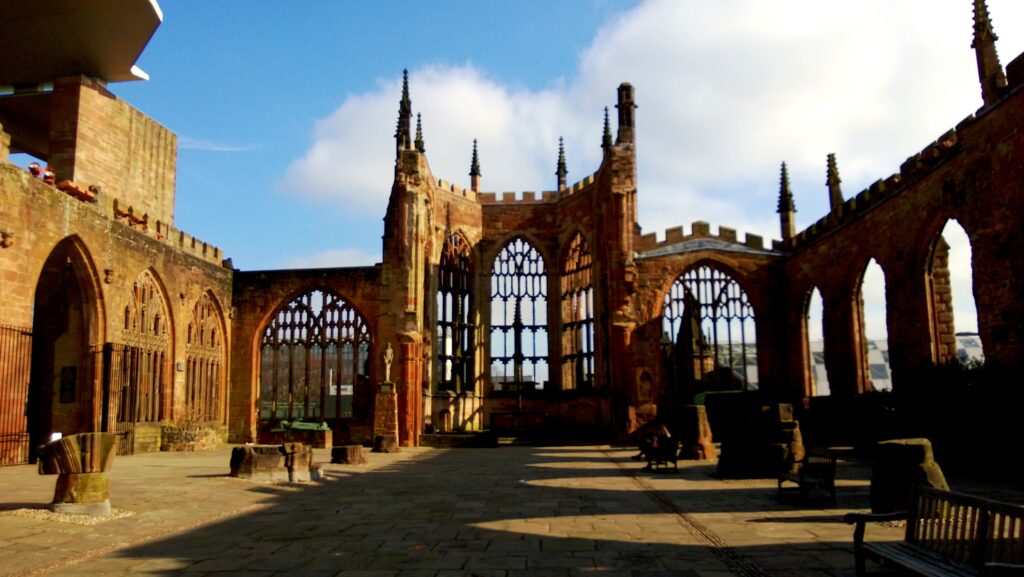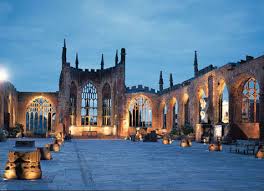
Fellows, I note this post to commemorate the anniversary of the November 14, 1940 bombing of Coventry, in the West Midlands county of Warwickshire, England. It offers significant clarity on a judgement call made by Churchill and his advisors at a crucial juncture of WWII. [Reprinted from https://onlymesspace.quora.com/ on Quora.com.]

On the night of 14 November 1940, three hundred German bombers dropped 500 tons of explosives, 33,000 incendiary bombs and dozens of parachute mines on the industrial city of Coventry. During the raid, 507 civilians were killed and 420 seriously injured.

A play at the Belgrade Theatre in Coventry, One Night In November, repeated the frequently made claim that Winston Churchill knew of the attack several days in advance, but that he held back the information to protect the most important secret of the war: the breaking of the German Enigma code at Bletchley Park. In the words of the press publicity: “… the play examines the idea that Winston Churchill had advance warning of the attack. Was Coventry sacrificed for the greater good? Or to provoke America into the war?”

The truth about the bombing of Coventry is very different. On 12 November 1940 [two days prior], Enigma decrypts made it clear that a major German bombing raid was imminent. Its code name, Moonlight Sonata, had been read in the decrypts. But the decrypts gave no clue as to the destination of the German bombers.

The Air Intelligence report that Churchill received on 12 November gave, on the basis of the latest intelligence, five possible targets: Central London, Greater London, the Thames Valley, or the Kent or Essex coasts.

A German pilot who had been shot down on November 9th had, under interrogation, suggested that two cities—Coventry and Birmingham—would both be attacked in a “colossal raid” between 15 and 20 November; but the senior Air Intelligence Liaison officer at Bletchley, Squadron Leader Humphreys, noted, in contrast to this, that there was “pretty definite information that the attack is to be against London and the Home Counties.”
The Intelligence analysts at Bletchley considered the German pilot’s information “doubtful,” as it was earlier than the information available to Squadron Leader Humphreys.
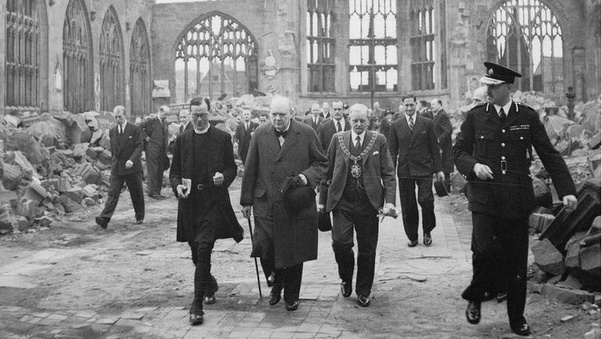
The defences of Coventry had recently been strengthened. Following a German air raid on 2 November—the sixteenth on Coventry in a month—Ernest Bevin, the Minister of Labour responsible for factory production, had complained to Churchill about the poor state of the city’s protection. In response, Churchill had given instructions on November 7 to strengthen Coventry’s anti-aircraft defences. These instructions had been carried out. Around Coventry on the night of 14 November were five times as many anti-aircraft guns per head of the population as there were around London, and one hundred British fighters were airborne. But that could not save the city from the firestorm created by the incendiary bombs.
[Content above written entirely by Quora author who goes by the nickname “Onlyme”. Photos were provided by the author.]
Here are a few photos of the cathedral today, and its replacement. It is a historical landmark.